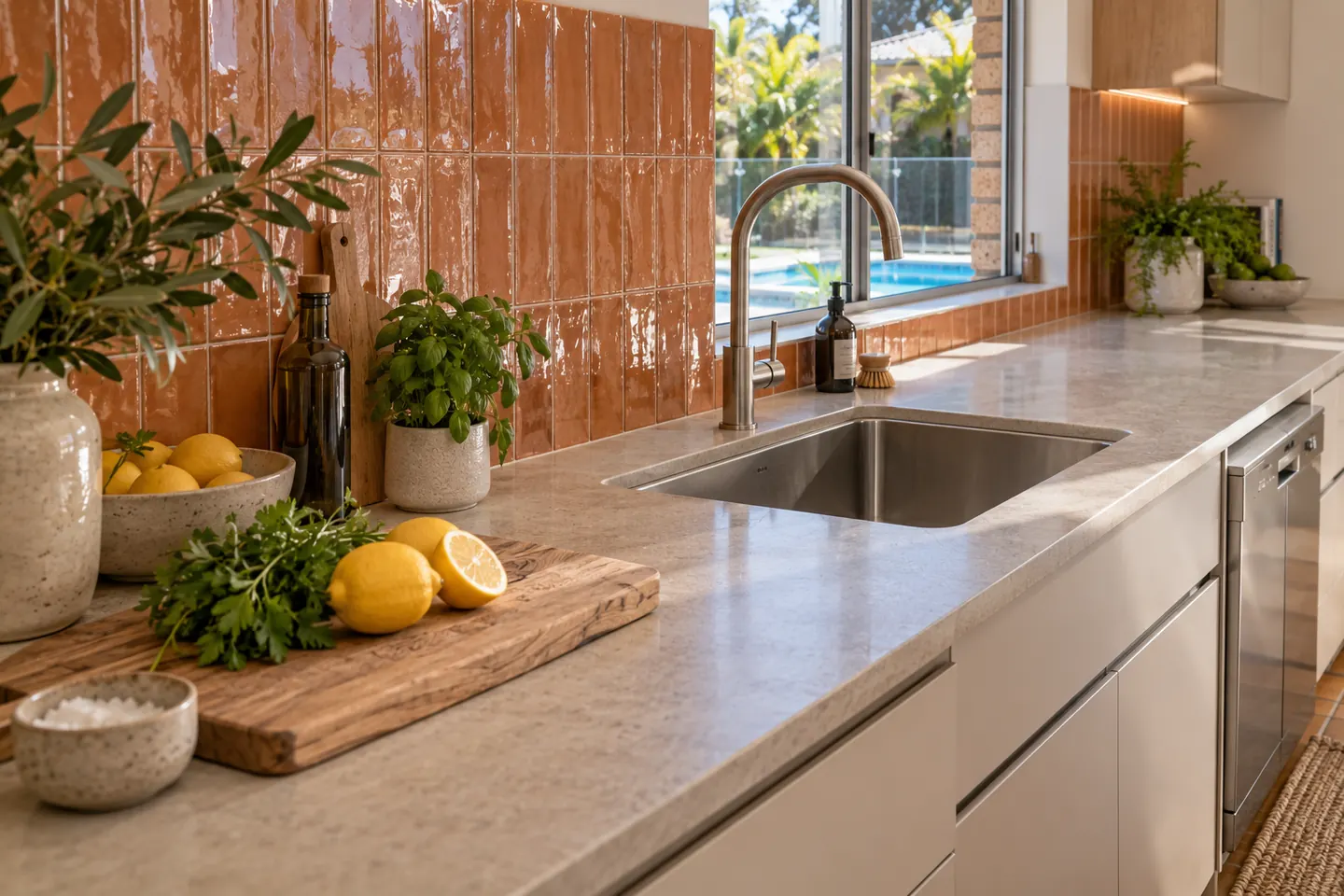
After the engineered stone ban
For a long time, engineered stone was the default in Australian kitchens. That ended on 1 July 2024, when the national ban took effect because of the silicosis risk to fabricators. Existing benchtops can stay put, but new kitchens use other materials.
The good news is that the alternatives are excellent, and several suit family kitchens very well.
Benchtop materials compared
| Material | Good at | Less good at | Suits |
|---|---|---|---|
| Porcelain / sintered slab | Heat, scratches, stains, UV | Edge chips; needs skilled fabrication | Busy family kitchens, outdoor servery benches |
| Granite | Heat, wear, natural character | Needs periodic sealing | Traditional and coastal looks |
| Quartzite | Hard-wearing natural stone | Price; check it is true quartzite | Feature islands |
| Marble | Classic beauty | Etches with lemon and vinegar, stains | Low-traffic or baking zones |
| Laminate | Price, colour range, forgiving | Heat marks; water at joins | Budget renovations, makeovers, rentals |
| Timber | Warmth, can be sanded back | Oiling, water near sinks | Islands, breakfast bars |
| Solid surface | Seamless joins, integrated sinks | Hot pans and scratches | Clean, minimalist kitchens |
| Stainless steel | Heat, hygiene | Scratches and marks show | Serious cooks, sculleries |
Splashback options
- Tiles — subway, finger, zellige-look or large-format. Endless choice.
- Glass — a single back-painted sheet, easy to wipe, reflects light.
- Porcelain slab — matched to the benchtop for a seamless look.
- Mirror or pressed metal — feature looks in smaller zones.
Behind a cooktop, check clearances and heat suitability for the material chosen.
How benchtops are installed
- Cabinets installed, levelled and fixed.
- The benchtop is templated on site.
- Slabs are fabricated off site with cut-outs and edge profiles.
- Installation and joining.
- Sink, cooktop and tapware connected; splashback fitted.
That gap between templating and installation is often the longest wait of the job. Laminate tops can be quicker.
Islands and edges
Waterfall ends, thicker mitred edges and seating overhangs add fabrication time and cost. Heavier materials may need hidden steel supports under an overhang. Rounded or softened edges are kinder on toddlers' heads.
Coastal note
For benches beside a bi-fold opening to the deck, or an outdoor servery bench, UV-stable and weather-resistant materials such as porcelain are the safer choice.
Costs
Benchtop choice can swing a kitchen budget by thousands. See the cost guide, or consider a kitchen makeover where new tops go on existing cabinets.
Call 02 4307 6053 or send your kitchen details through.
Questions people ask before they commit
Why is engineered stone no longer available?
From 1 July 2024, Australia banned the manufacture, supply, processing and installation of engineered stone benchtops, panels and slabs. Cutting and polishing it released high levels of respirable crystalline silica, which causes silicosis in the workers who fabricate it.
What is the most family-friendly benchtop?
It depends on priorities. Porcelain resists heat, scratches and stains very well. Quality laminate is affordable and forgiving. Granite is tough and heat resistant. Marble and timber are beautiful but need more care around acids, water and heat.
Do we have to remove our existing engineered stone benchtop?
No. The ban does not require existing benchtops to be removed. If a renovation involves cutting, modifying or removing it, the work needs appropriate controls to manage silica dust, so let your builder know what it is.
What is the easiest splashback to keep clean?
A single sheet of glass or a porcelain slab has no grout lines and wipes clean quickly. Tiles offer more choice and a handmade feel; larger tiles and a good sealed grout make cleaning easier.